About this product
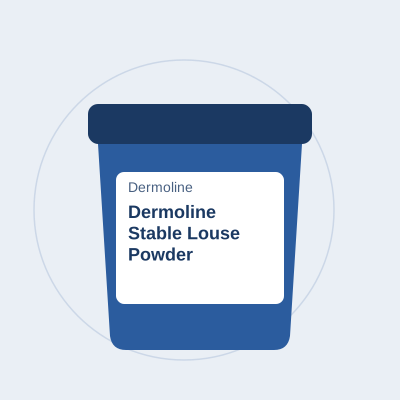
Dermoline Stable Louse Powder is dusted into the coat to treat lice on horses.
Repeat after 10 to 14 days to catch lice that hatch from eggs after the first treatment. Treat all horses in contact and clean shared kit.
What it is for
Lice are common in horses in late winter, when coats are thick and horses stand close together. Chewing lice cause itching, rubbing and bald patches along the neck and tail; sucking lice can cause anaemia in heavy burdens. Products for them include powders, washes and pour-ons. Leg mites in feathered horses are a separate problem that usually needs a vet.
Choosing well
- Confirm it is lice: part the hair along the mane and tail roots in daylight and look for moving lice or eggs stuck to hairs.
- Treat every horse in the group, even those not scratching.
Using it properly
- Groom off loose hair first so the product reaches the skin.
- Repeat after the interval on the pack, because most products do not kill eggs and a second treatment catches the next hatch.
- Wash or treat rugs, numnahs and grooming kit at the same time.
Cautions
- Clip or wash in mild weather if possible; wet horses chill quickly in winter.
- Some insecticides are toxic to cats and fish; store and dispose of them carefully.
Questions people ask
Why do lice keep coming back each winter?
A few lice survive on horses through summer and multiply when coats grow long. Treating every horse in the group, cleaning shared kit and checking new arrivals breaks the cycle.
This entry describes the product in general terms. Formulations, pack sizes and licensing change, so the leaflet that comes with the product is the final word on dose, species and warnings. For medicines, the VMD Product Information Database holds the current authorised leaflet.